Mining Sewage Treatment Plant | Heavy Metal Wastewater Treatment System


Product DESCRIPTION
Mining operations produce complex wastewater containing heavy metals, suspended solids, and acidic drainage. A conventional wastewater system cannot effectively treat such effluent. A dedicated mining sewage treatment plant is required to ensure environmental compliance and prevent contamination of nearby water bodies.
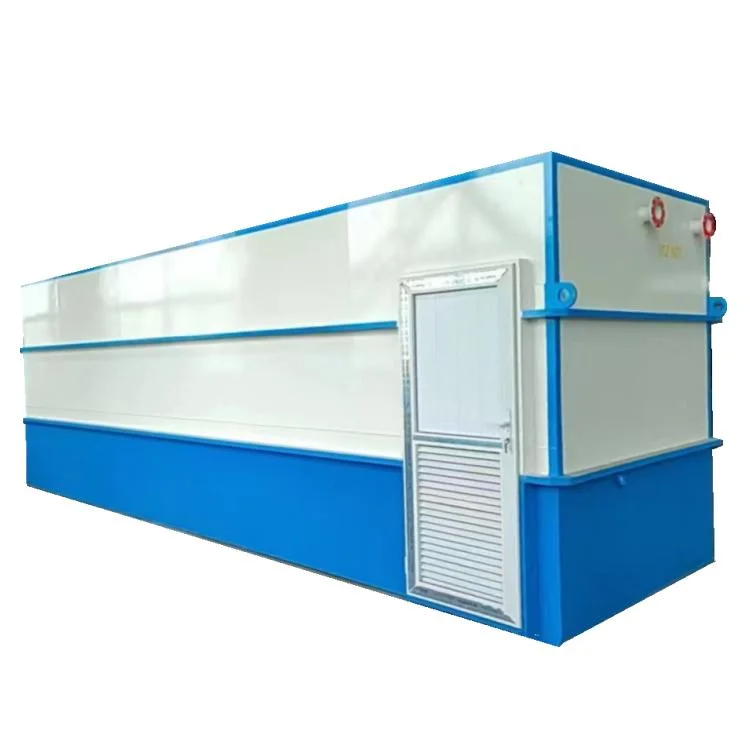
Our industrial mining sewage treatment plant integrates pH adjustment, chemical precipitation, dissolved air flotation (DAF), and sludge dewatering to remove heavy metals such as iron, copper, lead, and zinc.
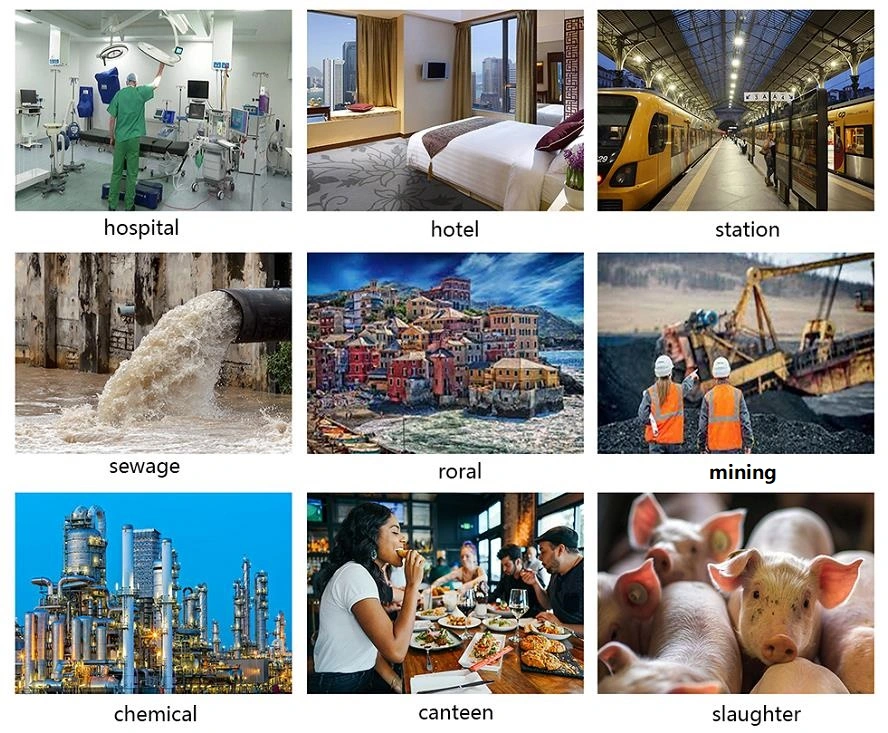
This advanced mining wastewater treatment system is suitable for gold mines, copper mines, coal mining facilities, and mineral processing plants across Africa and the Middle East.
Mining wastewater is one of the most complex industrial effluent types. Key challenges include:
1. Acid Mine Drainage (AMD)
Low pH water with high acidity corrodes equipment and threatens ecosystems.
2. High Heavy Metal Levels
Iron, copper, lead, zinc, manganese and other metals must be removed before discharge.
3. Suspended Solids & Turbidity
Turbid water carries solids that block pumps and reduce efficiency.
4. Variable Flow & Load
Mine discharge volumes fluctuate with rain, processing cycles and seasonal operations.
5. Regulatory Compliance
Strict governmental standards require reliable heavy metal removal and stable effluent quality.
Without a specialized mining wastewater treatment plant, untreated mine water risks environmental penalties and site closure.
Product Benefit
-
High heavy metal removal rate (>95%)
-
Handles acidic wastewater
-
Designed for harsh mining environments
-
Reduces environmental liability
-
Customizable capacity up to 2000 m³/day
Product Feature
-
Automatic chemical dosing system
-
Heavy-duty sludge filter press
-
Corrosion-resistant structural materials
-
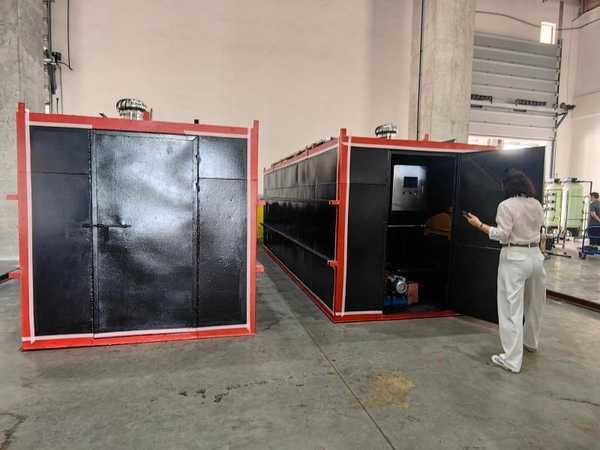
Modular or containerized design
-
Energy-efficient operation
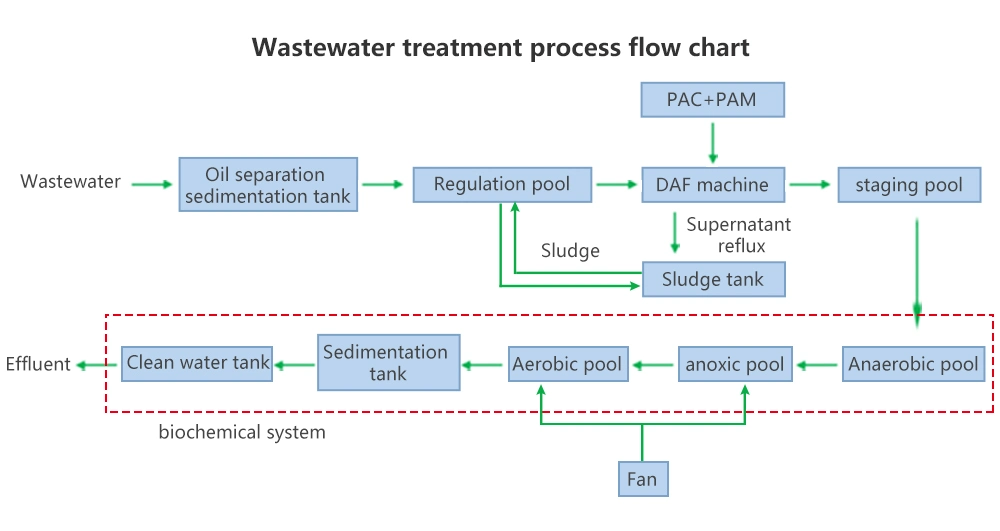
Mining Sewage Treatment Process
Screening
→ Equalization Tank
→ pH Neutralization
→ Chemical Coagulation & Flocculation
→ Dissolved Air Flotation (DAF)
→ Filtration
→ Sludge Dewatering
→ Safe Discharge
Mining Wastewater Treatment Process (Step-by-Step):
Step 1 – Screening & Grit Removal
What It Does:
Removes large debris, grit, rocks and coarse solids from raw mine wastewater.
Why It Matters:
Mining effluent often contains sand, rock particles and solids that can damage pumps and downstream equipment.
Key Benefit:
✔ Protects equipment
✔ Reduces maintenance
✔ Stabilizes downstream process
Step 2 – Equalization & Flow Balancing
Purpose:
Balances inconsistent flow rates and pollutant load.
Explanation:
Mining discharge varies based on rainfall, processing cycles, and site activity. Equalization prevents shock loads to the biological and chemical units.
Key Benefit:
✔ Stabilizes treatment performance
✔ Reduces chemical consumption
✔ Improves overall system reliability
Step 3 – pH Adjustment (Acid Neutralization)
What It Is:
Automatic pH correction using alkaline dosing to bring acidic mine water closer to neutral pH 6–9.
Why Critical:
Acid mine drainage can be corrosive and prevents effective heavy metal precipitation.
Key Benefit:
✔ Protects process equipment
✔ Ensures optimal metal removal
✔ Prevents ecosystem damage
Typical Range:
Before: pH 2–4
After: pH 6–9
Step 4 – Chemical Coagulation & Flocculation
How It Works:
Special coagulants and flocculants are added to destabilize dissolved particles and metal hydroxides forming larger aggregates.
Why It Matters:
Makes fine particles settleable or floatable for removal.
Key Benefit:
✔ Improves solids separation
✔ Enhances metal removal efficiency
✔ Reduces turbidity
Step 5 – Dissolved Air Flotation (DAF)
Function:
Fine air bubbles attach to suspended solids and metal precipitates, lifting them to the surface for removal.
Why DAF:
Mining wastewater often contains very fine solids that settle poorly.
Key Benefit:
✔ Highly efficient solids removal
✔ Clearer effluent
✔ Low sludge volume
Typical Removal:
TSS: > 85–95%
Step 6 – Filtration (Sand / Multimedia)
Purpose:
Polishes the effluent by removing remaining fine particles and turbidity.
Where Used:
Before discharge or reuse, especially required by environmental standards.
Key Benefit:
✔ Enhanced effluent clarity
✔ PSD-free discharge quality
Step 7 – Disinfection (If Required)
Purpose:
Kills pathogenic bacteria and stabilizes final discharge.
Typical Methods:
✔ UV disinfection (chemical-free)
✔ Chlorine dosing (cost-effective)
Key Benefit:
✔ Public health protection
✔ Compliance in sensitive locations
Step 8 – Sludge Dewatering & Management
Why It Matters:
Precipitates, flocculated solids and DAF sludge must be dewatered for safe disposal.
Options:
✔ Filter press
✔ Sludge drying bed
Key Benefit:
✔ Lower disposal cost
✔ Reduced environmental impact
Frequently Asked Questions (Mining Wastewater)
Q: What technologies are most effective for heavy metal removal?
Chemical precipitation + DAF is the most reliable method for mining wastewater containing dissolved metals.
Q: Can the system manage fluctuating inflows?
Yes. Equalization tank and automatic chemical dosing accommodate variable flow and load.
Q: How long does installation take?
Containerized systems can be installed within 2–6 weeks after site preparation.
Q: Is the system easy to operate with limited staff?
Yes. Automated PLC control and remote support make operation simple.
Q: Can treated water be reused?
Yes, with advanced filtration or MBR upgrade, treated water is suitable for reuse in processing or irrigation.
Product Application
-
Gold mining wastewater treatment
-
Copper and metal ore processing
-
Coal washing plants
-
Tailings pond water treatment
-
Industrial wastewater treatment projects