Mobile rigs often face a huge problem with dirty borehole water and very little space. I have seen many crews struggle because their filters are too big or break during a move. Our 500LPH system solves these issues and keeps your team healthy.
The ROAGUA 500LPH system is the perfect match for mobile drilling rigs because it combines a compact stainless steel frame with powerful filtration. It is easy to move, handles high salt levels in borehole water, and provides enough clean drinking water for a full field crew.
If you want to know how a small machine can handle the toughest drilling environments in Africa, keep reading. I will show you why this specific model is the best investment for your drilling business.
Space-Saving Design: Fitting Powerful Filtration into Compact Rigs?
Finding space on a drilling truck is a nightmare for most engineers. I know how it feels to look at a crowded deck and wonder where the water system will go. This compact design takes that stress away so you can focus on drilling.
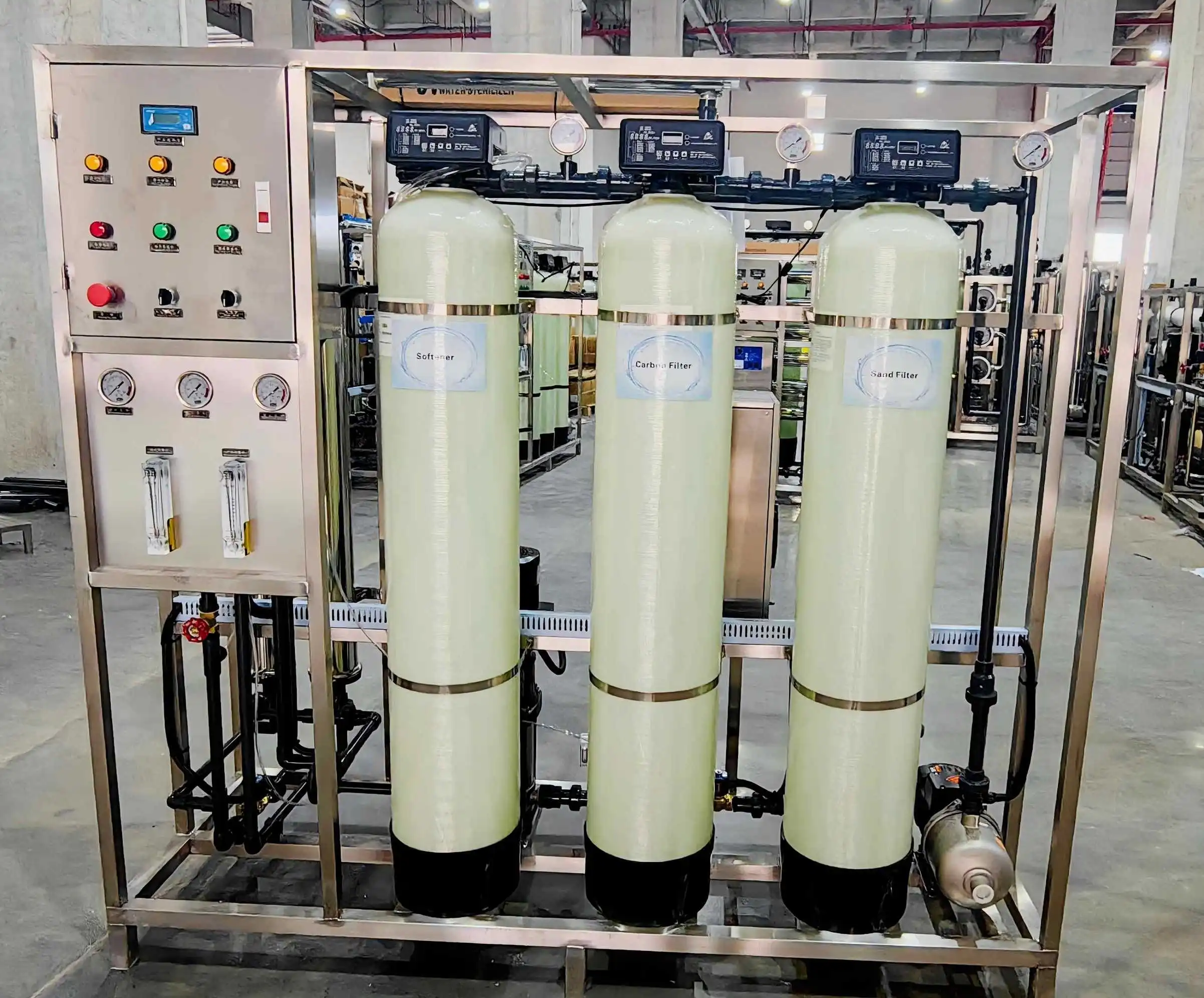
ROAGUA 500LPH systems use a vertical stainless steel frame design to save space on mobile drilling platforms. By stacking the filters and pumps, the system takes up very little room while still providing industrial-strength water purification for remote and crowded work sites.
When I talk to drilling contractors like Sydney, the first thing they mention is the lack of deck space. Most water systems are spread out horizontally. That does not work on a truck. I designed our 500LPH system to stand tall rather than wide. The stainless steel frame is not just for show; it holds everything—the pre-filters, the high-pressure pump, and the RO membranes—in one tight package.
Why a Compact Frame Matters
On a mobile rig, every square inch has a price. If your water system is too big, you might need a second truck just for water. That doubles your fuel and transport costs. My goal is to make sure you can fit everything on one rig. Our 500LPH unit is small enough to tuck into a corner, yet it is powerful enough to clean the dirtiest water.
Built for Tight Spaces
The layout is very smart. We put the heavy components at the bottom for stability and the controls at eye level. This means you do not need to walk around the whole machine to check the gauges. Everything is accessible from one side.
| Feature |
ROAGUA 500LPH |
Standard Systems |
| Footprint |
Less than 1 square meter |
2 to 3 square meters |
| Frame Material |
304/316 Stainless Steel |
Painted Carbon Steel |
| Installation |
Plug and Play |
Assembly Required |
| Height |
Optimized for Truck Beds |
Usually too tall or wide |
I also made sure the piping is tucked inside the frame. This prevents pipes from getting hit or snapped off when your crew is moving tools around the rig. It is a simple change, but it saves a lot of money on repairs. When you are in a remote part of Africa, a broken pipe can stop your whole project. I want to make sure that never happens to you.
Ease of Mobility: Rugged Frames Built for Frequent Relocation?
Moving from one site to another often breaks weak equipment. I have seen many water systems fail after just a few trips over bumpy roads. Our rugged frames are built to survive the rough travel that comes with drilling.
The 500LPH system features a reinforced frame and vibration-resistant piping to handle the shocks of frequent relocation. With optional wheels and a plug-and-play design, you can disconnect, move, and restart the water system in minutes, ensuring no time is wasted between drilling sites.
I know that drilling rigs are always on the move. You might be in one village today and fifty miles away tomorrow. The roads are often just dirt and rocks. This vibration is the enemy of water filters. Most systems have plastic connectors that crack under stress. I chose to use high-quality fittings and a structural frame that absorbs that kinetic energy.
Plug and Play for Fast Moves
When you arrive at a new site, you do not want to spend hours putting a machine together. I made this system “plug and play.” You connect the source water, plug in the power, and you have clean water. It is that simple. This is very important for crews who are tired after a long drive and just want to get to work.
Durability on the Road
The frame is welded to be stiff. We also use special mounts for the pump to stop it from shaking the rest of the system. I have tested these units in harsh conditions because I know my clients in Africa need gear that lasts.
Mobility Checklist for Drillers
- Integrated Wheels: Each unit can have heavy-duty wheels to roll it on and off ramps.
- Lifting Points: The frame has spots for hooks if you need to crane it onto a high deck.
- Secure Housing: All membranes are locked down so they do not shift during transport.
- Quick Connects: Standardized ports make it easy to swap hoses without tools.
If you are a purchasing manager, you should care about the “total cost of ownership.” A cheap system that breaks after three moves is actually very expensive. A ROAGUA system that lasts for years across hundreds of sites is the real bargain. I stand by the quality of our welding and our components because I want you to be a customer for the next ten years, not just once.
Reliable Output: Meeting the Daily Water Needs of Small to Mid-sized Crews?
A thirsty crew is an unhappy and slow crew. I once spoke to a manager who had to stop drilling because his team got sick from bad well water. Our 500LPH unit provides a steady flow of safe water so your project never stops.
With a capacity of 12,000 liters per day, the ROAGUA 500LPH system easily covers the drinking and technical needs of standard drilling crews. It uses multi-stage filtration to remove sediment, salt, and minerals, turning raw borehole water into high-quality potable water in any environment.
The math is simple. A typical crew of 10 to 15 people needs water for drinking, cooking, and basic washing. They also need water for the drilling process itself. 500 liters per hour is the “sweet spot.” It is not so big that it wastes power, but it is not so small that you run out. I often tell my clients that this model is the most popular in Africa for a reason—it just works.
Handling High TDS and Minerals
Borehole water in many drilling areas is full of salt and minerals. This is called high TDS (Total Dissolved Solids). Standard filters cannot touch this. I use high-pressure Reverse Osmosis (RO) membranes in the 500LPH system. These membranes act like a super-fine screen. They let the water through but stop the salt and minerals.
Automated and Easy to Use
I know you might not have a water expert on your rig. That is why I made the controls automated. The system monitors itself. If the water coming in is too dirty, the system tells you. If the tank is full, it stops. This means your drillers can focus on drilling, and the machine takes care of the water.
| Water Quality Factor |
Raw Borehole Water (Typical) |
After ROAGUA 500LPH |
| TDS (Salt/Minerals) |
2,000 – 5,000 ppm |
< 100 ppm |
| Turbidity (Cloudiness) |
High (Sand/Mud) |
Crystal Clear |
| Bacteria/Viruses |
Likely Present |
Removed |
| Taste |
Salty or Metallic |
Fresh and Clean |
Protection from Sand and Mud
Drilling water is often full of silt and sand. If this gets into the RO membrane, it will ruin it in minutes. I include a multi-stage pre-filtration module. This catches the big stuff before it reaches the expensive parts. It is like a shield for your investment. We also offer optional chemical dosing. If you are drilling through high-silica layers, we can add a scale inhibitor to keep the membranes clean. This level of detail is why our systems stay running while others fail.
The ROAGUA 500LPH system balances size, power, and toughness perfectly. It saves space, moves easily, and provides the clean water your crew needs to succeed in any remote location.