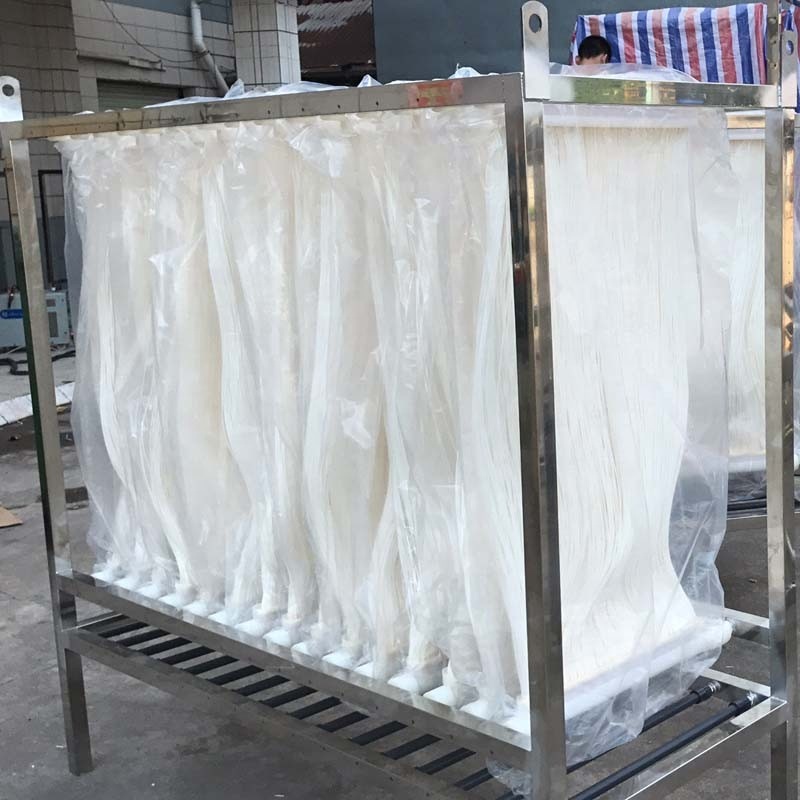
Are you worried about hospital discharge fines? I know how scary local inspections feel when your water is dirty. Let’s fix your wastewater system together right now and protect your hospital.
MBR technology is the most efficient choice because it combines biological treatment with a physical membrane barrier. This system removes over 90% of organic matter and almost all pathogens, ensuring your hospital stays compliant while saving significant space.
I have helped many hospital directors who were stressed about their water quality. They needed a solution that was simple, effective, and small enough to fit on their property. MBR is the answer that makes their lives easier every day.
How does the MBR process ensure my treated water is free of infectious pathogens?
Bacteria in hospital water can cause huge legal problems for your facility. I have seen many directors lose sleep over this risk. My MBR systems act as a permanent shield for your hospital.
The MBR process uses a membrane with tiny pores smaller than 0.5 microns. This physical barrier stops bacteria and most viruses from passing through, providing a high level of disinfection that protects the environment and your reputation.
When we talk about medical wastewater, the biggest concern is safety. Hospitals produce water filled with dangerous germs, viruses, and antibiotic-resistant bacteria. In a traditional system, you rely on gravity to let these things settle at the bottom of a big tank. This does not always work well. If the pump moves too fast or the chemistry is slightly off, the germs can flow right out into the local river. I tell my clients that MBR is different because it uses a physical “wall.”
This wall is the membrane. The pores in the membrane are so small that bacteria simply cannot fit through them. Imagine trying to push a basketball through a keyhole. It is impossible. This is how the MBR protects your hospital. Even if the biological part of the system has a bad day, the membrane stays strong. It keeps the dangerous solids and pathogens inside the system until they are properly treated or removed as sludge.
For a hospital like yours, this means you do not have to worry about a sudden spike in patients causing a failure in your water treatment. The system is stable. It also handles “micropollutants” better than old methods. These are things like medicine residues and cleaning chemicals that are common in hospital drains. Because the water stays in the system longer, the helpful bacteria have more time to break down these complex chemicals.
Pathogen Removal Efficiency
| Pollutant Type |
Traditional System (CAS) |
MBR System Performance |
Why it matters for hospitals |
| Bacteria (E. coli) |
90% – 99% removal |
99.99% – 99.999% removal |
Prevents disease outbreaks |
| Suspended Solids |
10 – 30 mg/L |
< 1 mg/L |
Water looks perfectly clear |
| Viruses |
Moderate removal |
High removal (barrier effect) |
Stops viral transmission |
| Turbidity |
High (cloudy) |
Very low (<0.5 NTU) |
High clarity for reuse |
This level of performance is why many governments now require MBR for new medical facilities. It is the gold standard for safety. If you want to pass your environmental audits with zero stress, you need a barrier that does not fail. My team at ROAGUA focuses on using high-quality PVDF membranes because they last long and stay clean. This ensures that the water leaving your hospital is safer than the water in many city pipes.
Can I reuse MBR-treated water for my hospital’s irrigation or cleaning?
Paying for fresh water while throwing away treated water is a waste of your budget. I want to help you cut costs and turn waste into a valuable resource for your facility.
Yes, you can reuse MBR-treated water for non-potable tasks like landscape irrigation, toilet flushing, and cooling towers. The water is clear, odorless, and meets high safety standards for these specific facility uses.
I often talk to hospital managers who are shocked by their monthly water bills. In many regions, especially in Africa and the Middle East, water is expensive and scarce. When you use an MBR system, you are not just “treating” waste; you are “manufacturing” usable water. Because the membrane filters out almost everything, the water that comes out is clear and does not smell. It looks just like the water from your tap.
You can use this water for your hospital gardens and green spaces. This keeps your facility looking beautiful without using expensive city water. You can also pipe this water back into the building for flushing toilets. Since toilet flushing can use up to 30% of a building’s water, the savings are huge. Some of my clients even use it for their cooling towers or for washing the hospital parking lots and ambulances.
To make the water 100% safe for reuse, we usually add a small UV light or a tiny bit of chlorine at the very end. This is a simple extra step that gives you total peace of mind. By reusing water, your hospital becomes a “Green Hospital.” This is great for your brand and shows the community that you care about the environment. It also pays for the equipment over time. Instead of just being an expense, the MBR system becomes an investment that saves you money every month.
Cost Savings from Water Reuse
| Usage Category |
Potential Water Savings |
Estimated Monthly Savings |
Benefit |
| Garden Irrigation |
100% replacement |
High |
Lush green grounds for patients |
| Toilet Flushing |
80% – 100% replacement |
Medium |
Massive reduction in utility bills |
| Floor/Car Washing |
100% replacement |
Low |
Practical use of clear water |
| Cooling Towers |
50% – 70% replacement |
Very High |
Keeps heavy machinery running cheap |
Using recycled water also protects you during water shortages. If the city shuts off the water for a day, your hospital can still flush toilets and maintain its landscape because you have your own internal supply. This independence is a big advantage for a busy medical center. When I design these systems for Dr. Samuel, I always include the pipes and pumps needed to make reuse easy. We make it a “plug and play” solution so your staff does not have to be water experts to use it.
What are the maintenance requirements for an MBR system in a busy hospital?
You have enough to do running a hospital without worrying about complex machines. I design these systems to work simply so your staff can focus on saving patients and managing the clinic.
MBR systems for hospitals are highly automated and require minimal daily labor. Maintenance involves periodic membrane cleaning (CIP) and checking sensors, which our integrated control systems handle with simple, user-friendly commands.
Many people think that advanced technology means more work. In my experience, it is actually the opposite. A well-designed MBR system is like a modern car. It has a lot of technology inside, but for the driver, it is just “start and go.” We use PLC (Programmable Logic Controller) systems that act as the brain of the machine. This brain watches the pumps, the pressure, and the air flow 24 hours a day. If something is wrong, it tells you immediately.
The main maintenance task is called “Cleaning In Place” or CIP. Every few months, the membrane needs a quick wash with a mild chemical to remove any buildup. Our systems do this almost automatically. Your staff just needs to make sure the chemical tank is full and press a button. They do not need to take the machine apart or get their hands dirty. This is very important for hospitals where the maintenance staff is usually busy with air conditioners and electrical repairs.
I also focus on using high-quality parts that are easy to find. If a pump needs a new seal in five years, you should be able to find it easily. At ROAGUA, we provide clear manuals in simple English. We avoid the confusing technical jargon that makes maintenance difficult. We also offer remote support. If your team has a question, they can send me a photo on WhatsApp, and my engineers can tell them exactly what to do. This makes the system very reliable for hospitals in remote areas or places without many water experts.
Typical Maintenance Schedule
| Task |
Frequency |
Time Required |
Skill Level |
| Check Sensor Readings |
Daily |
5 minutes |
Basic Staff |
| Refill Chemicals |
Monthly |
15 minutes |
Basic Staff |
| In-place Cleaning (CIP) |
Every 3-6 Months |
2 hours (automated) |
Maintenance Tech |
| Membrane Inspection |
Yearly |
1 hour |
Maintenance Tech |
Because the system is integrated into a single box or “skid,” it is much cleaner than old-fashioned plants. There are no open pools of smelly sewage. Everything is enclosed. This keeps the hospital air fresh and reduces the chance of pests like mosquitoes. A clean system is an easy-to-maintain system. When your equipment looks professional and organized, your staff will take better care of it.
How does MBR compare to traditional treatment methods regarding footprint and clarity?
Space is expensive in a city hospital. Why build a massive concrete plant when a compact box does a better job? I prefer solutions that fit your actual needs without wasting your land.
Compared to traditional methods, MBR reduces the physical footprint by up to 70% because it eliminates large settling tanks. It also produces much clearer water with significantly lower levels of organic pollutants like COD and BOD.
In the old days, hospitals used “Conventional Activated Sludge” or CAS. These systems need huge tanks because they use gravity to separate the sludge from the water. Gravity is slow. You need a lot of space to let the water sit still for hours. In a modern hospital, you probably want to use that space for a new wing, a parking lot, or a pharmacy. This is where MBR wins. Because we use a membrane to “pull” the water through, we don’t need the water to sit still. We can process more water in a much smaller tank.
This high density is possible because we can keep more “good bacteria” in the tank. In a normal system, if you have too many bacteria, they won’t settle, and the water gets messy. In an MBR, the membrane holds them all inside. This means the system is “stronger” and can eat the waste much faster. For the same amount of wastewater, an MBR plant is often only 30% of the size of an old plant. I have installed systems in small corners of hospital basements that replaced massive outdoor concrete structures.
Clarity is the other big win. Traditional systems often produce water that is a bit yellow or cloudy. This water is hard to disinfect because the germs hide behind the dirt particles. MBR water is crystal clear. This clarity makes your UV or chlorine disinfection much more powerful. You use fewer chemicals and get a better result. It is simply a smarter way to treat water in the 21st century.
Side-by-Side Comparison
| Feature |
MBR Technology |
Traditional System (CAS) |
| Space Needed |
Very Small (Compact) |
Very Large (Needs Clarifiers) |
| Water Clarity |
Crystal Clear (<3 NTU) |
Often Cloudy (10-20 NTU) |
| COD Removal |
80% – 93% |
60% – 75% |
| Sludge Produced |
Low |
High |
| Expansion |
Modular (Easy to add) |
Very Hard (Needs more concrete) |
If you are planning to grow your hospital, MBR is the best choice. If you need to treat more water later, we can often just add more membrane modules into the existing tank. You don’t need to dig new holes in the ground or pour more concrete. This flexibility is perfect for a growing medical group. My goal at ROAGUA is to give you a system that grows with you, stays out of the way, and works perfectly every single day.
MBR systems offer hospitals a safe, compact, and automated way to treat wastewater. They ensure compliance, allow for water reuse, and simplify daily management for busy medical facilities.
Would you like me to create a customized equipment list and price quote for your specific hospital’s daily water volume?