Starting a bottled water business is exciting, but the technical jargon can be overwhelming. When importing from China, you are often bombarded with acronyms like RO, UF, and UV. I understand your confusion because, at ROAGUA, I help clients like you navigate these choices every day. Many first-time buyers just want a machine that makes clean water, but suppliers often confuse them with complex specs, leaving them unsure which solution fits their local water quality in places like Africa.
December 2, 2025
RO (Reverse Osmosis) removes salts and is best for purified water; UF (Ultrafiltration) filters particles but keeps minerals, ideal for spring water; UV (Ultraviolet) is a disinfection step for safety. Understanding these distinctions ensures you buy the right system for your local water quality.
Understanding these differences affects not just the safety of your water, but your profit margins and maintenance headaches. Below, I will break down these technologies simply, so you can negotiate with Chinese suppliers like an expert and avoid buying the wrong equipment.
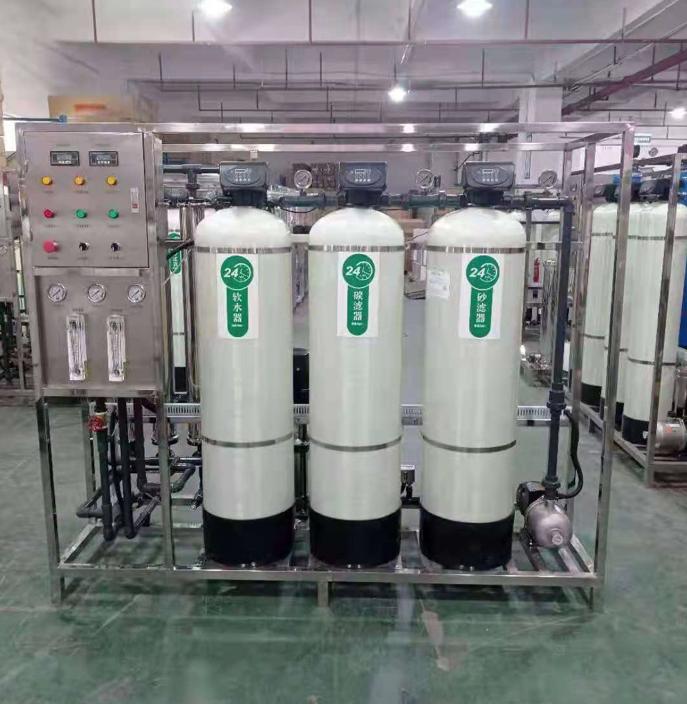
How do I decide between RO, UF, or UV for my water needs when I import equipment from China?
Buying the wrong machine is a nightmare. I once knew a client in Africa who bought a simple filter for salty borehole water to save money. The water still tasted salty, and his business failed before it started.
Decide based on your raw water report and business goal: Use RO for salty or groundwater to get pure water; choose UF for high-quality spring water; always add UV as a safety standard for any bottled water business.
To make the right decision, you must look at your “Source” and your “Customer.” It is not just a technical choice; it is a business model choice. In my experience dealing with African markets, many mistakes happen because buyers ignore basic water quality data.
First, look at the TDS (Total Dissolved Solids) level. This is critical. If you use borehole water or water near the coast, the TDS is usually high, making the water taste salty or bitter. In this case, RO (Reverse Osmosis) is your only option. The RO membrane has pores so small that only water molecules pass through, blocking 99% of salt and heavy metals. If you want to sell standard “Purified Water,” RO is essential because it turns salty water into sweet, clean water.
Second, if your water source is excellent, like a mountain spring with low TDS, and you want to keep natural minerals (like Calcium and Magnesium) to sell “Natural Mineral Water,” then UF (Ultrafiltration) is the better choice. UF removes mud, rust, and bacteria, but it lets salts pass through. If your raw water is salty, UF will not fix the taste.
Finally, regarding UV (Ultraviolet): Do not view this as a standalone filter. Think of it as your insurance policy. It does not remove anything from the water; it simply destroys the DNA of bacteria so they cannot reproduce. Whether you choose RO or UF, I always recommend adding UV at the end. It ensures that the water going into the bottle is sterile, protecting you from storage tank contamination.
Use this table to help you decide:
| Decision Factor | RO (Reverse Osmosis) | UF (Ultrafiltration) | UV (Ultraviolet) |
| Primary Goal | Remove salt, heavy metals, make pure water | Remove particles, keep minerals | Kill bacteria and viruses |
| Raw Water TDS | High TDS (Salty/Borehole/Sea) | Low TDS (Spring/Tap Water) | Any (needs clear water) |
| Taste Result | Pure, crisp, sweet (No mineral taste) | Natural taste (May have mineral taste) | No change to taste |
| Necessity | Essential for Purified Water business | Essential for Mineral Water business | Standard for ALL water businesses |
When sourcing from China, if a salesperson recommends a system without asking for your water report, be careful. You must know if your water is “salty” to choose between RO and UF, while UV is the lock that keeps it safe.
What performance differences should I look for in RO vs UF vs UV before I import from China?
Clients often ask me, “Lucky, why is the RO system so much more expensive than UF?” or “Since UV kills bacteria, why can’t I just use a UV light?” These questions come from not knowing the performance limits. Understanding this saves you money.
The core difference lies in filtration precision: RO is the finest (0.0001 microns) removing dissolved salts; UF is coarser (0.01 microns) blocking bacteria but not salts; UV has no physical pore size and only inactivates microorganisms without removing impurities.
Let’s look at this through a microscope to see the “war on impurities.” This explains the price and function gap.
RO (Reverse Osmosis): The Tightest Defense
RO filtration is incredibly fine—0.0001 microns. Imagine a net so tight only water fits through. This is why RO removes TDS. In Chinese equipment, check the “Salt Rejection Rate.” A good RO system should be over 98% or 99%. If your raw water is 1000ppm, RO brings it under 20ppm. UF and UV cannot do this. However, this performance has a cost: “Reject Water.” For every liter of pure water, you might throw away a liter of waste water. This is a cost you must plan for.
UF (Ultrafiltration): The Physical Sieve
UF pores are about 0.01 microns. It is like a fine screen. It easily stops bacteria (usually 0.2-2 microns) and mud. But for dissolved salt ions, this hole is huge, so they pass right through. The performance advantage of UF is “Low Pressure” and “Zero Wastewater.” It often runs on standard line pressure and wastes almost no water. If your selling point is “Mineral Water,” UF performs perfectly by keeping those minerals in.
UV (Ultraviolet): The Invisible Killer
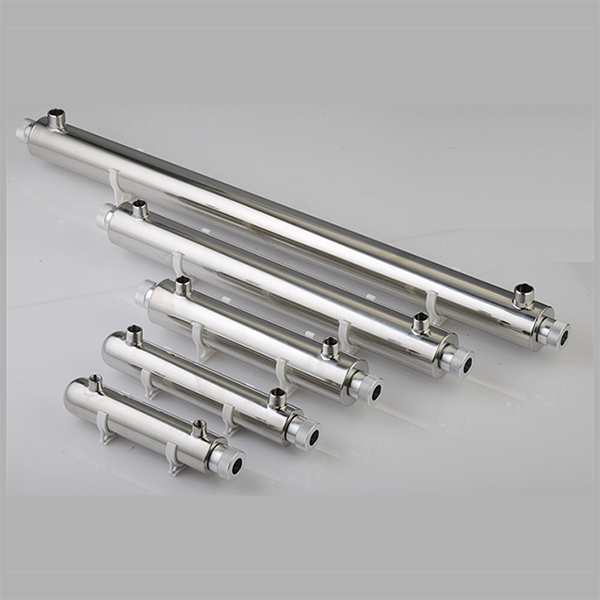
UV is different; it has no holes. It uses light waves (254nm). Its performance is not about “filtering” but “dosage.” When buying from China, check the flow rate match. If water flows too fast, the bacteria won’t die. Also, UV has a limit: it does not remove the dead bacteria bodies. They remain in the water. Also, if the water is dirty or cloudy, the light cannot penetrate, and it fails.
Here is a critical breakdown of their weaknesses:
- RO Weakness: Too clean (strips healthy minerals), high energy use, high water waste.
- UF Weakness: Cannot remove chemical pollution or heavy metals (ions).
- UV Weakness: Does not change chemistry, taste, color, or remove toxins.
- When talking to suppliers, ask: “What is the recovery rate of this RO?” or “Is the UV wattage matched to my peak flow?” These questions show you know your stuff.
How can I combine RO with UF or UV to meet my quality goals when I import a system from China?
No single device solves every problem. Just like building a house needs concrete, wood, and steel, a reliable water system needs a mix of technologies. I helped a client in Lagos design a combo system that turned deep well water into a top-selling brand.
The best strategy is usually a combination: Use UF as pre-treatment to protect expensive RO membranes, then install UV at the end of the RO system as a final safety barrier to ensure the water is sterile before bottling.
When you import customized equipment, you are buying “Lego blocks.” How you arrange them determines your success.
- UF + RO: The Golden Pair
I recommend this for surface water (rivers, lakes). Why? River water has mud and organic glue. If this hits your RO membrane directly, it will clog in days. RO membranes are expensive.
Here, UF acts as the “Bodyguard.”
- Lowers SDI: SDI (Silt Density Index) is a key test for RO feed water. UF lowers this effectively.
- Saves Money: Pre-treating with UF can extend your RO membrane life from 1 year to 3 years. The cost of the UF is less than the cost of replacing RO membranes frequently.
- RO + UV: Double Insurance
This is the standard for bottling. RO removes 99% of bugs, so why add UV?
- Stops Re-growth: RO water sits in a storage tank. Bacteria can grow in tanks or pipes. Placing a UV light between the pure water pump and the filling machine kills any “escapees.”
- Chemical Free: It is safer than adding chemicals like chlorine, which leaves a bad taste.
- Typical Process Flow
Use this table when requesting a quote from China to ensure you get a complete system:
| Stage | Equipment | Function | Why specify this for import? |
| Pre-treatment | Sand/Carbon Filter + UF | Remove solids, chlorine, reduce turbidity | Tell them your water is “dirty” to get UF protection for your RO. |
| Core | RO System | Remove salt, metals, bacteria | The engine of the system. Ensures low TDS (<10ppm). |
| Post-treatment | UV Light | Pipe sterilization | Insist on this BEFORE the filling machine for final safety. |
Customization Tip:
When shipping, ask about “Wet” vs. “Dry” membranes.
- RO Membranes: Usually dry (safe to store).
- UF Membranes: Often shipped wet (with preservation liquid). If shipped wet, they must not freeze or get too hot during shipping. Ask the supplier if they can provide dry UF membranes or better insulation to avoid damage.
What maintenance and cost differences will affect my choice between RO, UF, and UV when I import from China?
Don’t just look at the price tag; look at the running costs. I always tell clients: “Buy the horse, but ensure you can afford the hay.” RO, UF, and UV have very different electricity and spare part costs that can eat your profits if you don’t plan.
Costs vary in energy and consumables: RO consumes the most electricity and needs expensive membrane replacements; UV is cheap to run but has fragile lamps; UF has low operating costs but requires chemical cleaning and eventual membrane replacement.
Let’s look at the “Total Cost of Ownership” for these systems in an African context.
- Electricity and the Voltage Trap
RO: It is power-hungry. It needs a high-pressure pump. In areas with high electricity rates, this is a major daily cost.
UF: Very low power.
- UV: Tiny power usage (just a light bulb).
Critical Insight (Voltage): This is a huge risk. China uses 380V/50Hz or 220V/50Hz. If your country (like parts of the Americas or some African nations) uses 60Hz, you MUST customize the pumps and UV ballasts. If you run a 50Hz pump on 60Hz power, it will spin too fast and burn out in days. Specify this in your contract.
Consumables and Fragile Goods
- RO Membranes: The most expensive part. Replaced every 1-3 years. Import advice: Buy an extra set with the machine to save on future air freight.
- UV Lamps: A logistics headache. They contain mercury and break easily. I strongly advise you to order 20% extra spare lamps with the main shipment. Require wooden crate packaging with foam. Do not save money on packaging, or you will receive broken glass. Lamps last about 9000 hours (1 year).
- Waste Water and Cleaning
- RO Hidden Cost: Water bills. RO creates waste. 50-75% recovery means for every 1 ton of product, you might dump 1 ton.
- Chemicals: RO and UF need CIP (Clean-in-Place). You need to buy acid and alkali (Citric Acid, NaOH) locally to wash the membranes.
- Cost Structure Comparison
| Cost Item | RO (Reverse Osmosis) | UF (Ultrafiltration) | UV (Ultraviolet) |
| Initial Cost | High (Pumps + Membranes) | Medium | Low |
| Electricity | High (Main Op-Ex) | Low | Very Low |
| Water Waste | High (30-50% rejection) | Zero (Tiny backwash) | Zero |
| Spare Parts | Membranes: 1-3 Years (Expensive) | Membranes: 2-3 Years (Medium) | Lamp: 1 Year (Cheap but fragile) |
| Maintenance | Complex (Pressure monitoring) | Medium (Backwashing) | Simple (Change bulb) |
When importing, buy a “2-year spare parts kit.” This includes RO membranes, UV lamps, and pump seals. It adds to the upfront cost, but it prevents your factory from stopping for a month while you wait for a DHL package.
Choosing between RO, UF, or UV isn’t about which is “better,” but which fits your water source and business plan. RO is the foundation for pure water, UF protects against dirt, and UV ensures safety. At ROAGUA, we don’t just sell machines; we help you build a reliable system. If you are ready to start, or have questions about your water report, contact me. Let’s turn your vision for clean water into a profitable reality.


How Hotels Reuse Treated Wastewater?
July 28, 2026

Cost of a Hotel Sewage Treatment Plant
July 24, 2026

How to Choose a Hotel Wastewater Treatment Plant?
July 20, 2026

Complete Guide to Hotel Wastewater Treatment
July 17, 2026