October 28, 2026     Postado por :

I see growers lose crops every season because raw canal or well water brings hidden bacteria directly to their fields. I run ROAGUA, and I help farmers fix dirty irrigation water before diseases spread.


UV and ozone improve agricultural irrigation water quality by destroying harmful bacteria, viruses, and fungi without leaving toxic chemical residues. UV light damages microbial DNA to stop reproduction, while ozone gas oxidizes cell walls, breaks down organic contaminants, elevates dissolved oxygen, and prevents drip emitter clogging.


I talk with farm owners across South America every week, and many tell me they feel lost when picking between these two methods. I want to share my practical knowledge with you so you can protect your crops and choose the right equipment with total confidence.

método de desinfecção com ozônio

ultravioleta & Ozone Disinfection for Agricultural Irrigation Water?

I know you worry about root rot and food safety issues every time river water flows into your main irrigation line. I watch growers waste huge money on random chemical flushes that still fail to stop fungal outbreaks.


UV and ozone disinfect irrigation water through two physical and chemical mechanisms: UV lamps emit 254-nanometer light to break pathogen DNA chains, while ozone generators inject active gas that oxidizes cell membranes. Both systems neutralize waterborne microbes without leaving harmful salt residues or chlorine byproducts in farm soil.


I often test farm water samples that look clean to the naked eye, yet the laboratory tests show thousands of active fungal spores. You cannot judge water quality just by looking at clarity. Pathogens like Pythium, Fusarium, and E. coli travel silently through pipes. When you spray dirty water on leafy greens or pump it into drip lines, you spread contamination everywhere.


I want to compare how these two systems operate side by side so you can understand their real functions.


Evaluation Metric UV Disinfection System Ozone Gas Treatment
Main Mechanism Physical light damages microbial DNA and RNA Chemical oxidation tears apart cell walls
Primary Agricultural Task Inactivates bacteria and viruses without chemicals Destroys microbes and breaks down organic matter
Key Working Factor Delivered UV dose, water clarity, and flow rate Gas concentration, water temperature, and contact time
Lasting Residual Leaves no chemical residue in irrigation lines Decays rapidly into natural dissolved oxygen
Routine Maintenance Cleans quartz sleeves and replaces UV lamps yearly Checks gas seals, check valves, and air dryers
Primary Limitation Suspended solids block light rays Demands proper off-gas venting and contact tanks

Why We Combine Light and Gas for Complete Sanitation

I tell my clients that single tools have blind spots. UV light stops bacteria from multiplying, but it cannot remove physical slime inside old PVC pipes. Some bacteria also use sunlight to heal their broken DNA through a natural process called photoreactivation.


Ozone attacks this problem from a different angle. It attacks the outer wall of the microbe directly. Once the cell wall breaks, the organism dies permanently and cannot repair itself. When we run ozone before or alongside UV light, we create an Advanced Oxidation Process. This pairing generates hydroxyl radicals that destroy persistent pesticide traces and stubborn organics.


The Problem with Particle Shielding

I always warn growers that dirty water can blind UV lamps. If your well water carries sand, silt, or rust, those tiny particles act like shields for floating microbes. A bacterium hidden behind a speck of clay passes straight through the UV chamber without taking damage.


Raw Water Source -> Sand Media Filter -> Cartridge Filter (5-Micron) -> Ozone Contact Tank -> UV Sterilizer -> Clean Crops

Ozone also suffers if you skip physical pre-filtration. Floating organic matter drinks up ozone gas instantly. This means you need a massive, expensive generator just to overcome the dirt load before you kill a single spore. I always set up disc filters or sand media tanks ahead of disinfection units to guarantee high light transmission and low chemical demand.

ultravioleta & Ozone Water Treatment for Greenhouses, Farms & Crop Production?

I see greenhouse owners dump expensive fertilized drain water every day because they fear circulating deadly root diseases back to young plants. I know this waste cuts your margins and depletes local water reservoirs very quickly.


UV and ozone systems treat water for greenhouses and farms by sanitizing recycled drain runoff, oxidizing biological slime in drip emitters, and increasing dissolved oxygen levels. These systems keep vital mineral fertilizers like nitrogen, phosphorus, and potassium intact while neutralizing waterborne pathogens that attack roots.


I spend much of my time troubleshooting commercial greenhouses and fruit orchards where drip emitters stop dripping. Most people assume the clogs are just dirt or sand. When I cut those drip lines open, I usually find thick biological slime. Algae and bacteria feed on liquid fertilizer inside dark pipes, creating sticky mats that trap mineral scale.


Ozone gas breaks down this organic glue. As ozonated water travels through your piping, it strips away the biofilm. Once the slime layer disappears, mineral scale cannot stick to the plastic walls, and your emitters spray with balanced pressure across the entire field.


Irrigation System Problem Conventional Chemical Response ultravioleta & Ozone Engineering Solution
Blocked Drip Emitters Acid wash and harsh chlorine flushes Ozone clears biofilm and prevents organic clogging
Recycled Runoff Pathogens Dumping water into drainage ditches UV inactivates root fungi while keeping fertilizer salts
Low Root Zone Oxygen Installing noisy mechanical air bubblers Ozone naturally degrades into high dissolved oxygen ($O_2$)
Chemical Leaf Burn Lowering sanitizer dosage, risking disease Zero chemical residues and zero phytotoxic salts
Iron and Manganese Stains Frequent emitter replacement Ozone oxidizes dissolved metals for easy filtration

Protecting High-Value Fertilizers

I get asked all the time if ozone will destroy expensive liquid fertilizers. I tell my clients that standard mineral ions like nitrate, phosphate, potassium, and sulfate remain completely stable under normal disinfection doses.


You only need caution with chelated iron. Strong ozone doses can break the chemical ring holding iron in solution, which causes the metal to precipitate out. I solve this by sizing the ozone dose accurately and placing iron injection points downstream of the disinfection contact loop. This simple plumbing layout keeps your nutrients active and your crops well fed.


Boosting Root Respiration

I love showing growers what happens to dissolved oxygen when ozone does its job. Ozone consists of three oxygen atoms. The third atom is unstable and breaks away quickly to oxidize organic targets.


Once that reaction finishes, the remaining molecule is pure diatomic oxygen. This oxygen dissolves straight into the irrigation water. When you deliver this oxygen-rich water to the root zone, plant roots breathe easier, nutrient uptake speeds up, and anaerobic soil fungi lose their breeding grounds.

UV/OZÔNIO

Customized UV & Ozone Solutions for Sustainable Agriculture in South America?

I hear from South American growers who struggle with changing river levels, muddy lagoon water, and unreliable overseas suppliers who ship cheap parts. I watch farms suffer major crop losses when substandard lamps burn out during critical dry periods.


Customized UV and ozone solutions for South America account for seasonal water turbidity, remote power fluctuations, and specific crop sensitivities. By sizing equipment according to peak flow rates, water transmittance, and microbial targets, custom systems deliver stable water quality for avocado, berry, citrus, and vegetable exports.


I work closely with growers in Peru, Chile, Brazil, and Colombia who manage vast fields of avocados, blueberries, and table grapes. Agriculture in South America is booming, but water sources present huge operational challenges. A farm near Ica or the Piura valley might pull water from a deep well in October, then switch to a muddy canal in February when mountain rains arrive.


A standard off-the-shelf unit built for clean municipal tap water will fail under these variable farm conditions. I tell every client that you cannot select a water treatment system simply by checking the pipe size on your pump.


Regional Agricultural Challenge Typical Source Water Condition Tailored UV & Ozone Engineering Action
Coastal River Runoff High seasonal mud, clay, and organics Multi-stage automatic backwash disc filters before UV units
Deep Well Aquifers Dissolved iron, manganese, and hardness Ozone oxidation contact vessel followed by greensand media filters
Open Surface Lagoons Algal blooms and high microbial counts Dual treatment: Ozone for algae control plus UV for pathogen kill
Remote Valley Farms Voltage spikes and dirty field power Heavy-duty electronic ballasts and industrial PLC control panels
Export Crop Standards Strict zero-residue supermarket rules 100% chemical-free water sanitization for export compliance

The Danger of Cheap Equipment in Remote Fields

I see too many purchasing managers choose cheap equipment online just to save a few dollars upfront. When the shipment arrives, the stainless steel reactor uses low-grade metal that rusts in salty well water within six months. The quartz sleeves crack easily, and the electronic ballasts fail the moment the farm generator switches loads.


When a water system stops during the dry season, you cannot irrigate your crops. If you skip water for three days under hot sun, your fruit drops and your season is ruined.


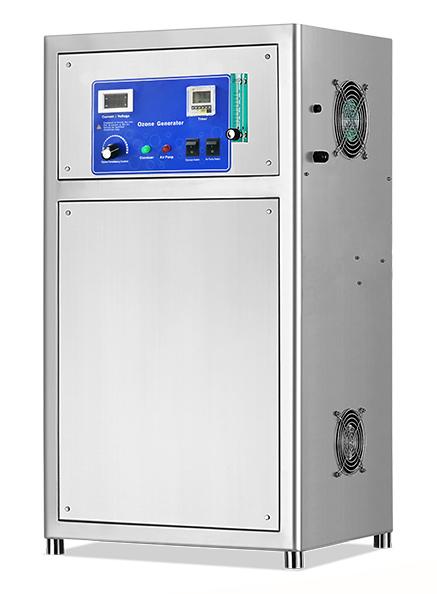
At ROAGUA, I build our agricultural systems with high-grade 304 or 316L stainless steel reactors. I insist on using premium quartz sleeves and genuine high-output amalgam lamps that hold their disinfection power for up to 12,000 hours. For our ozone generators, we use corona discharge cells with ceramic dielectrics and oil-free air compressors to prevent unexpected breakdowns in dusty farm environments.


Matching Water Tests to Real Engineering

I never quote an agricultural machine until I see a water test report or discuss the actual water source with the farm manager. I look at three critical numbers before I calculate machine size:


  • Total Suspended Solids (TSS)
  • Ultraviolet Transmittance (UVT)
  • Iron and Manganese content

If your water has a low UVT rating, light cannot travel through the chamber effectively. I compensate for this by slowing the water velocity, adding more lamps, or installing automatic wiping rings to clean the glass sleeves without stopping the water flow.


I make sure our equipment matches your farm schedule, your local power setup, and your workers’ skill level. That direct engineering focus is what turns dirty, unpredictable field water into safe, clean growth for your business.
I know clean water is the foundation of every successful harvest. Using UV and ozone gives you healthy crops, clean pipes, and high export yields without chemical risks. Reach out to me at [email protected] or visit www.roagua.com, and I will help you design the right water system for your farm.