UV personalizado & Ozone Solutions for Sustainable Agriculture in South America?
I hear from South American growers who struggle with changing river levels, muddy lagoon water, and unreliable overseas suppliers who ship cheap parts. I watch farms suffer major crop losses when substandard lamps burn out during critical dry periods.
Customized UV and ozone solutions for South America account for seasonal water turbidity, remote power fluctuations, and specific crop sensitivities. By sizing equipment according to peak flow rates, water transmittance, and microbial targets, custom systems deliver stable water quality for avocado, berry, citrus, and vegetable exports.
I work closely with growers in Peru, Chile, Brazil, and Colombia who manage vast fields of avocados, blueberries, and table grapes. Agriculture in South America is booming, but water sources present huge operational challenges. A farm near Ica or the Piura valley might pull water from a deep well in October, then switch to a muddy canal in February when mountain rains arrive.
A standard off-the-shelf unit built for clean municipal tap water will fail under these variable farm conditions. I tell every client that you cannot select a water treatment system simply by checking the pipe size on your pump.
| Regional Agricultural Challenge |
Typical Source Water Condition |
Tailored UV & Ozone Engineering Action |
| Coastal River Runoff |
High seasonal mud, clay, and organics |
Multi-stage automatic backwash disc filters before UV units |
| Deep Well Aquifers |
Dissolved iron, manganese, and hardness |
Ozone oxidation contact vessel followed by greensand media filters |
| Open Surface Lagoons |
Algal blooms and high microbial counts |
Dual treatment: Ozone for algae control plus UV for pathogen kill |
| Remote Valley Farms |
Voltage spikes and dirty field power |
Heavy-duty electronic ballasts and industrial PLC control panels |
| Export Crop Standards |
Strict zero-residue supermarket rules |
100% chemical-free water sanitization for export compliance |
The Danger of Cheap Equipment in Remote Fields
I see too many purchasing managers choose cheap equipment online just to save a few dollars upfront. When the shipment arrives, the stainless steel reactor uses low-grade metal that rusts in salty well water within six months. The quartz sleeves crack easily, and the electronic ballasts fail the moment the farm generator switches loads.
When a water system stops during the dry season, you cannot irrigate your crops. If you skip water for three days under hot sun, your fruit drops and your season is ruined.
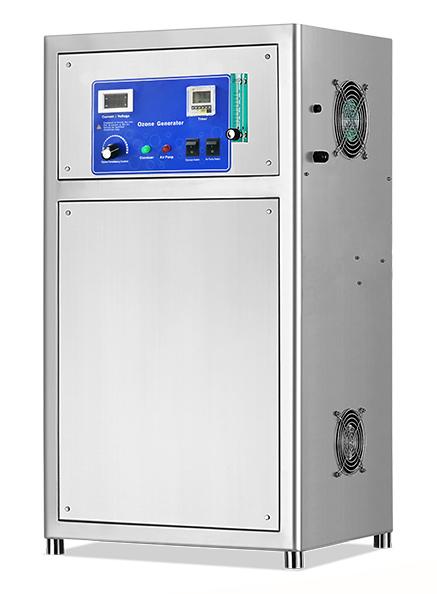
At ROAGUA, I build our agricultural systems with high-grade 304 or 316L stainless steel reactors. I insist on using premium quartz sleeves and genuine high-output amalgam lamps that hold their disinfection power for up to 12,000 hours. For our ozone generators, we use corona discharge cells with ceramic dielectrics and oil-free air compressors to prevent unexpected breakdowns in dusty farm environments.
Matching Water Tests to Real Engineering
I never quote an agricultural machine until I see a water test report or discuss the actual water source with the farm manager. I look at three critical numbers before I calculate machine size:
- Total Suspended Solids (TSS)
- Ultraviolet Transmittance (UVT)
- Iron and Manganese content
If your water has a low UVT rating, light cannot travel through the chamber effectively. I compensate for this by slowing the water velocity, adding more lamps, or installing automatic wiping rings to clean the glass sleeves without stopping the water flow.
I make sure our equipment matches your farm schedule, your local power setup, and your workers’ skill level. That direct engineering focus is what turns dirty, unpredictable field water into safe, clean growth for your business.