1 mai 2026     Posté par :

Many drilling sites struggle with dirty water. Your crew gets thirsty and sick. I know how hard it is to run a business when you cannot find a safe drink for your team.

The best way to get clean water on remote sites is a multi-barrier on-site system. I recommend using mobile reverse osmosis units or containerized treatment plants. These systems treat raw water locally. They make it safe, affordable, and easy to access for every worker on site.

I want to help you understand why this is the best path forward. Let us look at the challenges and the solutions I have used for over ten years in this industry.

Identifying Common Contaminants in Remote Groundwater?

You pump water from the ground and it looks clear. But is it really safe? Hidden salts and tiny bacteria can stop your project. I have seen many crews get sick because they trusted the wrong source.

Common contaminants include high salt levels, heavy metals, and harmful bacteria. In many remote sites I work with, brackish water is the main issue. You need a system that filters out dirt first, then removes dissolved salts and kills tiny microbes to ensure safety.

The Visible and Invisible Threats in the Ground

When we talk about groundwater at a drilling site, we look at two things. The first is what you can see. This is called turbidity. It means the water is cloudy or muddy. Sand, grit, and clay are common here. These particles are bad for your tools and your body. They clog up small pipes and can cause stomach pain if you drink them.

The second threat is what you cannot see. This is often more dangerous. In many parts of Africa where I send my equipment, the water isbrackish.This means it has a lot of salt. It is not as salty as the sea, but you cannot drink it. If you drink salty water, you will get more thirsty. Your kidneys will have to work too hard. Also, we find heavy metals like lead or arsenic in some areas. These are poisons that build up in the body over time.

Why Simple Filters Often Fail

Many people think a simple cloth or a sand filter is enough. I tell my clients that this is a mistake. A sand filter only takes out the big dirt. It does not touch the salt or the bacteria. Bacteria like E. coli or Cholera are very small. They pass right through standard filters. This is why we use amulti-barrierapproach. We use different steps to catch different things.

Common Contaminants Table

Type de contaminant Examples Best Treatment Method
Physical Solids Sand, Silt, Mud Multi-media Filtration
Chemical Salts Sodium, Calcium, Magnesium Osmose inverse (RO)
Biological Pathogens Bacteria, Viruses, Cysts UV Sterilization or Chlorine
Dissolved Metals Iron, Lead, Manganese Specialized Resin or RO

The Problem with High TDS

TDS stands for Total Dissolved Solids. It is a measure of everything dissolved in the water. For drinking water, we want the TDS to be low. Usually, under 500 is good. In many remote drilling sites, the TDS is 2,000 or even 5,000. Drinking this water every day will make your crew feel tired and unwell. High TDS also leaves white crusty scales on your equipment. This ruins your heaters and your pipes. I always ask my clients for a water test report. I need to know the TDS so I can build the right machine for them.

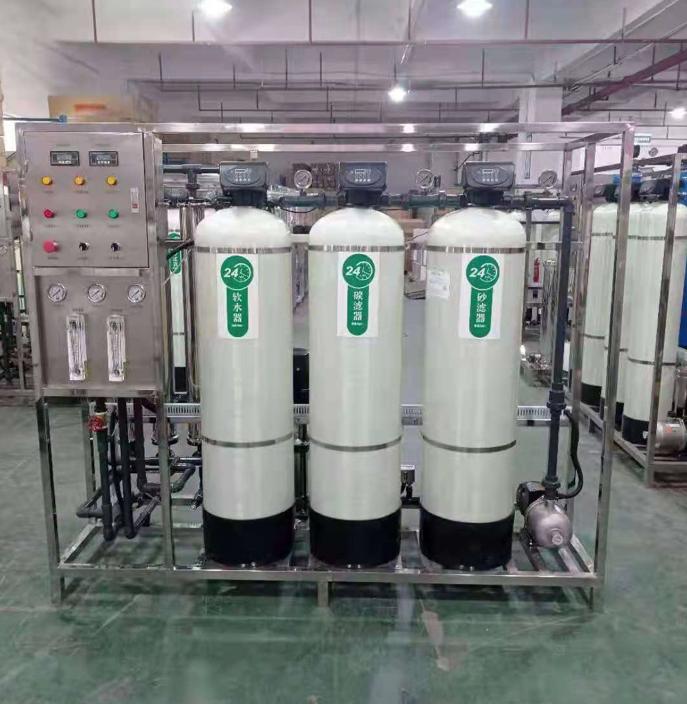
Usine RO pour éliminer le sel et réduire la dureté

The Logistics Challenge: Why On-site Treatment Beats Bottled Water Delivery?

Relying on water trucks is a big risk. Roads wash out and drivers get lost. I have watched site managers get very stressed when the water truck is three days late. It is a nightmare for your budget.

On-site treatment is better because it removes the risk of delivery delays and cuts your costs. By treating water where you work, you gain total control over quality. It is the only way to ensure 24/7 hydration in far-off, off-grid locations like drilling camps.

The High Cost of Moving Water

Think about the weight of water. It is very heavy. When you buy bottled water or hire a tanker, you are paying mostly for the fuel and the truck. You are not just paying for the water. In remote areas, the price of one liter of water can be five times higher than in the city. If you have 50 workers, they need at least 150 to 200 liters of drinking water every day. That is a lot of money spent on transport.

I often calculate thereturn on investmentfor my clients. Usually, an on-site RO system pays for itself in just a few months. After that, your water is almost free. You only pay for a little bit of electricity and some filter changes. You save thousands of dollars every year.

Reliability and Security of Supply

A drilling site is a busy place. You have a schedule to keep. If you run out of water, you have to stop work. You cannot ask men to work in the heat without water. It is dangerous. On-site treatment gives youwater security.As long as you have a well or a river, you have drinking water. You do not have to wait for a truck.

I have seen sites where the only road was blocked by a storm. The food was okay, but the water was gone. They had to fly in water by helicopter. That cost a fortune. If they had a ROAGUA unit on site, they would have been fine. My units are built to work in these tough spots. They are strong and they keep working even when the weather is bad.

Bottled Water vs. On-site Treatment Comparison

Fonctionnalité Bottled/Trucked Water On-site Treatment (RO)
Cost per Liter Very High (includes transport) Very Low (pennies)
Availability Depends on road conditions Available 24/7
Quality Control You trust the supplier You test it yourself
Impact environnemental High waste (plastic bottles) Low waste
Storage Space Needs large space for crates Small footprint for the unit

Reducing Plastic Waste

There is another big problem with bottled water: the empty bottles. I have visited many sites in Africa where there are thousands of empty plastic bottles on the ground. It looks terrible and it is bad for the land. When you treat water on-site, your workers use refillable bottles. You stop the plastic waste. This is better for the environment and better for your company’s image.

ROAGUA’s Integrated Solutions for Instant Potable Water?

You need a partner who understands the ground and the technical side of water. I founded ROAGUA to solve these exact problems. My team and I build rugged equipment that works in the most difficult places on earth.

ROAGUA provides customized containerized RO systems for remote drilling. We use our 10 years of experience to build machines that handle 500 to 1000 liters per hour. Our engineers design every unit based on your specific local water quality reports to guarantee safe results.

Why Our Reverse Osmosis Systems are Different

At ROAGUA, we focus on Reverse Osmosis (RO). I believe RO is the king of water treatment. It is the only technology that can take out almost everything. It removes salts, metals, and germs all at once. For a drilling site, you need something that is “tout-en-un.” You do not want five different machines from five different companies.

Our systems areintegrated.This means we put the pumps, the filters, the membranes, and the controllers into one strong frame. Sometimes we even put the whole system inside a shipping container. You just connect the pipes and turn it on. I know that you are a driller, not a plumber. You need a machine that is easy to use. That is why we use simple PLC controls. They tell you exactly what the machine is doing.

Custom Design Based on Your Water

I never sell the same machine to everyone. Every well is different. One site might have too much iron. Another site might have too much salt. I always ask my clients,Send me your water test.Then, our engineers in China sit down and draw a plan just for you.

We have a lot of experience in the African market. We know the heat is high and the dust is everywhere. We use high-quality stainless steel and strong parts that do not break easily. We also make sure the filters are easy to find and replace. I want your machine to last for ten years, not ten months.

ROAGUA System Capabilities Table

System Model Débit Meilleur cas d'utilisation
RO-500LPH 500 Liters/Hour Small camps (10-20 people)
RO-1000LPH 1,000 Liters/Hour Medium sites (30-60 people)
Containerized Plant 2,000+ Liters/Hour Large villages or big drilling rigs
Solar RO Skid Varies Off-grid sites with no fuel

Support and Maintenance

Buying the machine is only the start. I know you worry about what happens if a part breaks. We are planning to open service centers in Africa soon to help with this. For now, we provide very clear videos and manuals. My engineers are always available on WhatsApp or LinkedIn to help you. We use common parts for things like valves and pipes. You can usually find a replacement in a local town if you need it quickly. But we also ship a “kit de pièces de rechange” with every machine. This kit has everything you need for the first year of work.

I care about your success. If your crew has clean water, they work better. If they work better, your business grows. That is my goal for ROAGUA. We do not just sell machines. We solve your water problems so you can focus on the drilling.

On-site treatment is the smartest choice for drilling sites. It saves money and keeps your crew safe. Contact me at ROAGUA to design your custom water solution today.