How to Build Customized UV & Ozone Solutions for Healthcare & Pharmaceutical Facilities?
I know you worry about getting stuck with a generic water machine that does not fit your local water source or room layout. Ordering the wrong equipment from overseas can lead to expensive site modifications and long delays.
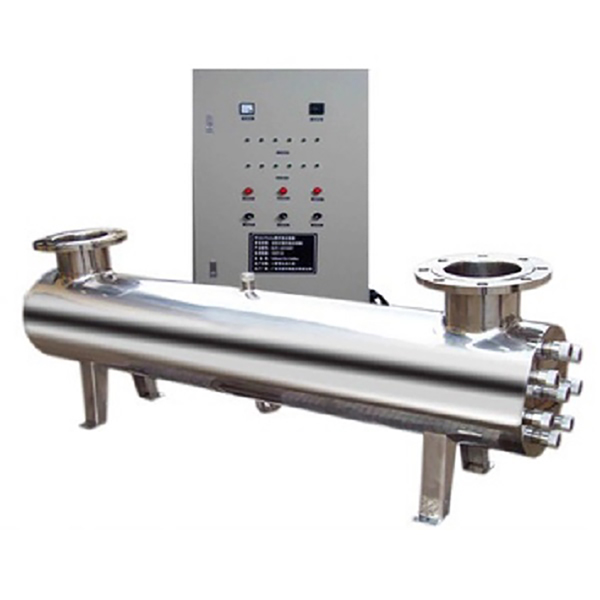
Customized healthcare UV and ozone systems require matched sizing based on incoming water quality, ultraviolet transmittance, peak flow rates, and sanitary piping standards. A reliable setup uses 316L stainless steel contact parts, automated ozone off-gas destructors, and real-time monitoring sensors to guarantee safe clinical water production.
When I customize water treatment equipment at ROAGUA for overseas clients, I never rely on generic catalog models. A hospital in Nairobi might draw water from a municipal pipe with high chlorine, while a facility outside town pumps hard water from a deep borehole. If you feed cloudy water into a UV unit, the dirt particles shield bacteria from the light rays, and the disinfection process fails.
Why Physical Pre-Filtration Dictates Disinfection Success
I tell all my engineering clients that UV and ozone equipment can only work well if your pre-treatment filters do their job first. You cannot shine light through murky water, and you cannot waste expensive ozone gas on heavy dirt. Ultraviolet Transmittance measures how much light passes through a water sample over a set distance. If your water contains high iron, manganese, or suspended dirt, the UV transmittance drops below 85 percent. When this happens, pathogens hide behind physical particles and pass through the disinfection chamber alive.
We always build our custom skids with multi-media sand filters, activated carbon beds, and 5-micron sediment cartridge filters upstream. Removing physical dirt raises the UV transmittance above 95 percent. This clean water allows the germicidal light to hit every single pathogen. Clean water also reduces ozone demand, meaning your ozone generator uses far less electric power to achieve the required disinfection target.
Material Compatibility and Sanitary Construction Standards
I pay close attention to the metal and rubber parts inside our machines because ozone is a very harsh chemical oxidizer. If an unverified factory uses cheap 304 stainless steel or standard black rubber gaskets, dissolved ozone will eat through those parts within a few months. The leaking joints cause water damage, and leaking ozone gas creates a respiratory hazard for hospital staff.
In our ROAGUA production lines, we use 316L stainless steel for all piping, reactor chambers, and storage tanks that touch dissolved ozone or pure water. We polish the internal pipe walls to an ultra-smooth sanitary finish to stop bacteria from grabbing onto microscopic metal scratches. We build all our seals using pure PTFE or genuine Viton rubber, which resist ozone corrosion for years.
| معلمة جودة المياه |
Minimum Required Target |
Impact on UV Performance |
Impact on Ozone Performance |
| التعكر |
< 1.0 NTU (Ideal < 0.2 NTU) |
High turbidity shields bacteria from light rays |
Consumes ozone dose; slows down microbial kill rate |
| UV Transmittance (UVT) |
> 90% at 254 nm wavelength |
Low UVT prevents light from crossing water chamber |
No direct impact on ozone gas dissolution |
| Total Iron & Manganese |
Fe < 0.1 mg/L, Mn < 0.02 mg/L |
Coats quartz sleeves with brown mineral scale |
Precipitates into dark mineral dust inside tanks |
| Total Hardness ($CaCO_3$) |
< 100 mg/L (Softened water) |
Forms white heat scale on hot quartz lamp surfaces |
Harmless to ozone, but scales venturi injectors |
| Dissolved Bromide ($Br^-$) |
< 0.02 mg/L |
No chemical interference with UV light rays |
Reacts with ozone to form toxic bromate byproducts |
Source Water Chemistry and Toxic Bromate Risks
I always test source water for dissolved bromide ions before recommending an ozone generator to a hospital client. When ozone mixes with water that contains natural bromide salts, a chemical reaction occurs that creates bromate ($BrO_3^-$). Bromate is a recognized human carcinogen. The United States EPA and the World Health Organization set a strict limit for bromate in drinking water at 0.010 milligrams per liter, which equals 10 micrograms per liter.
If our laboratory water test shows natural bromide in your raw water supply, I do not install high-dose ozone systems for direct drinking or patient care streams. Instead, I rely more heavily on multi-barrier UV disinfection skids paired with advanced membrane filtration. If ozone must be used for tank washing, I add specialized chemical dosing or catalytic carbon filters to prevent bromate formation.
Managing Safety Hazards and Off-Gas Venting
I take personal responsibility for factory safety, and I remind my clients that ozone gas presents real health risks if not handled with care. If ozone leaks into an enclosed equipment room, workers will experience chest tightness, coughing, and eye burning. A safe, custom-engineered ozone skid must never vent raw ozone gas into the surrounding room.
Every ozone system we manufacture includes an automated thermal-catalytic off-gas destructor mounted on top of the contact tank. As ozone gas rises out of the water surface, the vent pipe pulls it through a metal chamber filled with manganese dioxide catalyst. The catalyst splits the ozone molecule apart instantly and converts it back into harmless oxygen gas before it vents outside. We also wire ambient ozone leak detectors near the machine skid. If the sensor detects even 0.1 parts per million of ozone in the room air, the central PLC controller shuts down the ozone power supply and turns on emergency exhaust fans. This strict safety system keeps hospital technicians safe during routine maintenance.