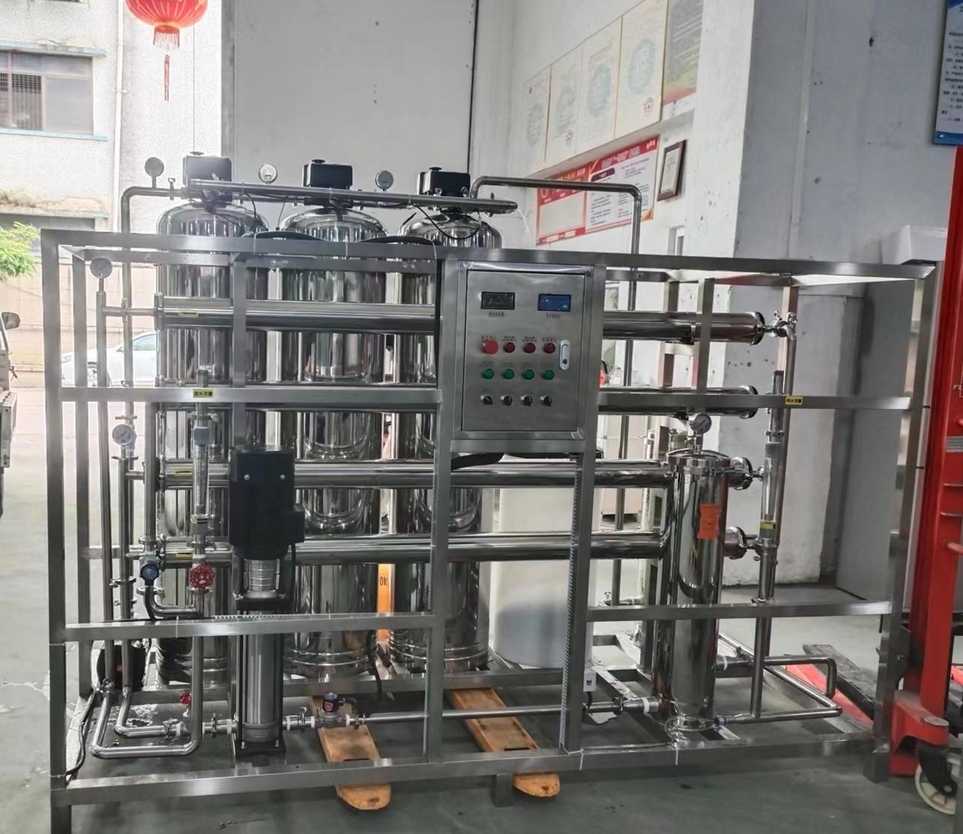
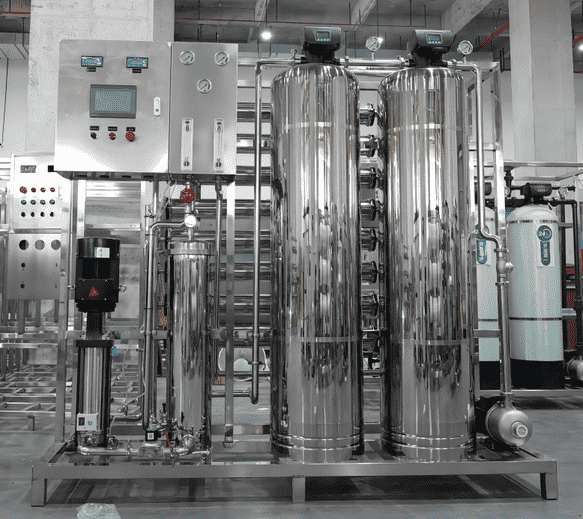
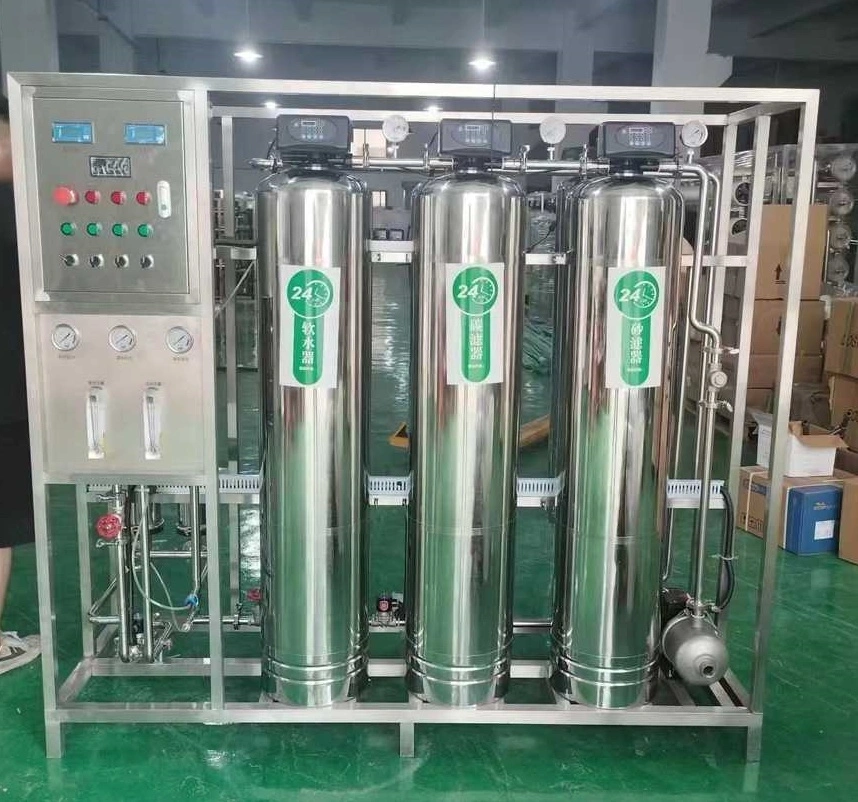
Je connais le stress de voir de la rouille dans une chaîne de production alimentaire. C’est un cauchemar qui peut fermer votre usine et ruiner la réputation de votre marque en un seul jour.
L'acier inoxydable est le premier choix pour les systèmes d'eau de l'industrie alimentaire car il résiste à la corrosion, reste hygiénique et dure des décennies. Sa surface non poreuse empêche la croissance des bactéries, garantissant que votre eau de procédé répond à des normes de sécurité strictes tout en maintenant vos coûts de maintenance à long terme très bas.
J'ai aidé de nombreux propriétaires d'usines à passer du plastique ou de l'acier bon marché à l'acier inoxydable de haute qualité. Si vous souhaitez savoir pourquoi ce matériau est la référence pour votre établissement, continuez à lire.
Qu’est-ce qui fait de l’acier inoxydable le premier choix pour les systèmes d’eau de l’industrie alimentaire ?
Je me souviens d'un client d'une usine de boissons qui essayait d'économiser de l'argent en utilisant des tuyaux en plastique pour ses conduites d'eau chaude. En un an, les tuyaux se sont déformés et ont fui, ce qui lui a coûté des milliers de dollars en temps de production perdu.
L'acier inoxydable l'emporte grâce à son mélange unique de chrome et de nickel, qui crée une couche protectrice auto-cicatrisante. Ce “couche passive” arrête la rouille et empêche les métaux de s'infiltrer dans vos produits alimentaires, ce qui le rend plus sûr que l'acier au carbone ou le plastique pour les systèmes d'eau à haute pression et haute température.
Lorsque je parle aux ingénieurs de ROAGUA, nous nous concentrons toujours sur le “film passif” en acier inoxydable. Il s’agit d’une très fine couche d’oxyde de chrome qui se forme à la surface. Si vous grattez le métal, cette couche se guérit d’elle-même lorsqu’elle entre en contact avec l’oxygène. C'est pourquoi l'acier inoxydable ne rouille pas comme le fer ordinaire. Dans l'industrie agroalimentaire, nous utilisons principalement deux types : 304 et 316.
Je suggère généralement l’acier inoxydable 304 pour une utilisation générale de l’eau, car il est solide et coûte moins cher. Cependant, si votre eau contient beaucoup de sel ou si vous utilisez des produits chimiques de nettoyage puissants, je recommande le 316. Cette version contient du molybdène. Cet ingrédient supplémentaire aide le métal à résister “piqûres,” qui sont de minuscules trous qui peuvent se former dans les environnements salés. Pour les eaux très salées, comme dans certaines usines de transformation de fruits de mer, nous utilisons même de l'acier inoxydable 2205 duplex.
Comparaison des nuances d'acier inoxydable
| Grade |
Résistance à la corrosion |
Meilleur cas d'utilisation |
Niveau de coût |
| 304 |
Haut |
Eau de procédé générale, eau potable |
Modéré |
| 316 |
Très élevé |
Eau salée, aliments acides, systèmes CIP |
Plus haut |
| 2205 |
Extrême |
Taux de chlorure très élevés, eau de mer |
Le plus haut |
Je tiens également à mentionner que l'acier inoxydable est un matériau très résistant. Il peut supporter la haute pression des pompes à eau et la chaleur élevée du nettoyage à la vapeur sans se fissurer ni fondre. Cette résistance mécanique est vitale pour la sécurité de vos travailleurs et de vos machines. Lorsque vous utilisez de l’acier inoxydable, vous n’achetez pas seulement du métal ; vous achetez la tranquillité d'esprit pour vos opérations quotidiennes.
Comment l’acier inoxydable améliore-t-il l’hygiène et la sécurité dans mon établissement ?
Une fois, j’ai visité une usine où l’on utilisait des tuyaux vieux et rugueux, et les résultats du laboratoire ont montré des niveaux élevés de bactéries même après le nettoyage. Nous avons découvert que les bactéries se cachaient dans de minuscules rayures sur la surface des tuyaux, invisibles à l’œil nu.
L'acier inoxydable améliore l'hygiène en offrant une surface lisse et non poreuse qui empêche “biofilm” de coller. Il est facile à désinfecter à l'aide des méthodes de nettoyage sur place (CIP) avec de l'eau chaude et des produits chimiques, garantissant qu'aucun microbe nocif ou goût métallique ne contamine vos aliments ou boissons finaux.
Je dis toujours à mes clients que “douceur” est le secret de la sécurité alimentaire. Dans le monde du traitement de l'eau, nous mesurons cela comme “rugosité de la surface” ou Râ. Plus la surface est lisse, plus il est difficile pour les bactéries de trouver un foyer. Lorsque nous fabriquons des réservoirs et des canalisations chez ROAGUA, nous pouvons utiliser un procédé appelé électropolissage. Cela rend la surface métallique aussi lisse que le verre.
Les bactéries adorent s'y développer “les biofilms,” qui sont des couches visqueuses qui les protègent des produits chimiques de nettoyage. Sur le plastique ou le fer brut, ces biofilms sont très difficiles à éliminer. Mais sur une surface en acier inoxydable poli, vos produits chimiques de nettoyage peuvent atteindre tous les endroits. Cela signifie que votre système de nettoyage en place (CIP) fonctionne bien mieux. Vous utilisez moins d'eau et moins de produits chimiques pour obtenir un résultat parfait.
Finitions de surface et niveaux d'hygiène
| Type de finition |
Description |
Évaluation de l'hygiène |
Application commune |
| Finition 2B |
Lisse, laminé à froid |
Bien |
Réservoirs de stockage |
| Finition n°4 |
Finition brossée/grainée |
Mieux |
Surfaces extérieures |
| Électropoli |
Comme un miroir, ultra-lisse |
Meilleur |
Eau de haute pureté, canalisations |
Je pense aussi au “pureté” de l'eau. Certains matériaux, comme certains plastiques ou métaux de faible qualité, peuvent libérer des produits chimiques ou un “goût métallique” dans l'eau au fil du temps. C’est ce qu’on appelle la lixiviation. L'acier inoxydable est inerte, ce qui signifie qu'il ne réagit pas avec l'eau. Votre eau reste pure et vos produits alimentaires ont exactement le même goût qu'ils devraient. C'est pourquoi la FDA et d'autres groupes mondiaux de sécurité alimentaire préfèrent l'acier inoxydable pour toute surface en contact avec les aliments ou l'eau.
Quels sont les avantages en matière de durabilité et d’entretien des équipements en acier inoxydable ?
J'ai vu de nombreux propriétaires acheter du matériel bon marché pour passer tous leurs week-ends à réparer les fuites et à remplacer les vannes rouillées. C’est un cycle de frustration qui tue vos marges bénéficiaires et épuise votre équipe.
L'acier inoxydable offre une durabilité inégalée, pouvant durer de 20 à 30 ans ou plus avec très peu d'entretien. Il supporte les changements de température extrêmes pendant la stérilisation sans se fissurer. Contrairement à l’acier revêtu, il n’y a pas de peinture qui s’écaille, ce qui signifie que vous consacrez moins de temps aux réparations et plus de temps à la production.
Je crois que la meilleure machine est celle à laquelle on ne doit pas penser tous les jours. L'acier inoxydable est ce genre de matériau. Il est incroyablement solide et ne se fragilise pas avec le temps. J'ai vu en Chine des systèmes d'eau en acier inoxydable qui fonctionnent depuis 20 ans et qui semblent encore presque neufs. Si vous utilisez des tuyaux en plastique, ils pourraient devenir cassants à cause du soleil ou de la chaleur de votre usine et éventuellement se fissurer.
L’un des plus grands avantages en matière d’entretien est que l’acier inoxydable n’a pas besoin d’être peint. Si vous utilisez de l’acier au carbone, vous devez le peindre pour arrêter la rouille. Mais dans une usine alimentaire, la peinture constitue un danger. Il peut se décoller et tomber dans les aliments. Avec l'acier inoxydable, le “argent” le look est le métal réel. Vous n’avez pas à vous soucier des chips ou des flocons.
Comparaison de maintenance : acier inoxydable et alternatives
| Fonctionnalité |
Acier inoxydable |
Plastique (PVC/HDPE) |
Acier au carbone revêtu |
| Durée de vie |
20+ ans |
5-10 ans |
10-15 ans |
| Résistance à la chaleur |
Excellent |
Pauvre |
Modéré |
| Besoins de réparation |
Très faible |
Modéré |
Élevé (Repeinture) |
| Résistance aux chocs |
Haut |
Faible |
Haut |
Je veux aussi parler de “temps d'arrêt.” Chaque fois qu’un tuyau fuit ou qu’un réservoir a besoin d’un patch, toute votre usine peut s’arrêter. Cela coûte beaucoup d'argent. Les joints en acier inoxydable sont généralement soudés à l'aide de “soudage TIG orbital,” ce qui crée un lien très fort et permanent. Ces soudures sont très propres et ne fuient pas. Lorsque je conçois un système pour un client, je me concentre sur sa réalisation “définir et oublier.” Vous investissez davantage au début afin de pouvoir travailler sans vous arrêter pendant les deux décennies suivantes.
Comment justifier l’investissement dans l’acier inoxydable auprès de mon équipe de direction ?
Je sais qu'il est difficile de demander un budget plus important lorsque le patron regarde les résultats financiers. J'ai participé à de nombreuses réunions où “moins cher” L'option a été gagnée, mais l'entreprise l'a regretté deux ans plus tard.
Vous pouvez justifier l'acier inoxydable en montrant le “Coût total de possession.” Bien qu'il coûte plus cher aujourd'hui, il permet d'économiser de l'argent en durant 3 fois plus longtemps que le plastique et en nécessitant 50 % d'entretien en moins. Cela réduit également le risque de rappels alimentaires coûteux et aide votre entreprise à atteindre ses objectifs de développement durable ESG grâce à une recyclabilité à 100 %.
Je suggère toujours à mes clients d'utiliser un “Coût du cycle de vie” argument. Si un système en plastique coûte 10 000 $ mais dure 5 ans, et qu'un système en acier inoxydable coûte 20 000 $ mais dure 20 ans, l'acier inoxydable est en réalité beaucoup moins cher. Vous devez acheter le système en plastique quatre fois pour égaler la durée de vie d'un système en acier inoxydable ! De plus, vous devez assumer les coûts de main-d’œuvre pour le remplacer toutes les quelques années.
Un autre point que je dis à la direction concerne “Atténuation des risques.” Une seule épidémie bactérienne provoquée par un tuyau sale peut coûter à une entreprise des millions de dollars en rappels et en poursuites. L'acier inoxydable est une police d'assurance pour votre marque. Il est beaucoup plus facile de réussir un audit de sécurité alimentaire (comme HACCP ou ISO) lorsque votre système d’eau est fabriqué en acier inoxydable poli de haute qualité. Les auditeurs adorent le voir parce qu’ils savent que c’est le choix le plus sûr.
Enfin, je mentionne la durabilité. De plus en plus de clients se soucient de l'environnement. L'acier inoxydable est 100% recyclable. Lorsque la machine arrive enfin en fin de vie, vous pouvez vendre le métal à un bon prix. Ce n'est pas “poubelle” comme du vieux plastique. Cela correspond parfaitement aux objectifs des entreprises modernes d'être plus “vert.” Je trouve que lorsque les gestionnaires constatent les économies à long terme et les avantages en matière de sécurité, le prix initial plus élevé devient beaucoup plus facile à accepter.
J'espère que cela vous aidera à comprendre pourquoi nous préconisons toujours l'acier inoxydable dans l'industrie alimentaire. Il maintient votre eau propre, votre usine en fonctionnement et vos coûts à long terme faibles.
Souhaitez-vous que je crée une liste d’équipements en acier inoxydable personnalisée pour vos besoins spécifiques en matière de qualité d’eau ?